
Scottish clan crests and badges: a guide to wearing your clan’s crest
Scottish heraldry works differently from almost anywhere else in Europe, and one fact explains most of it. In Scotland, a clan’s coat of arms belongs to one person: the chief. Everyone else in the clan wears something different, a crest badge, which shows that they belong to the clan without claiming the chief’s arms as their own.
It sounds like a technicality. In practice it shaped how Scots have shown their loyalty for centuries, and it’s still the right way to wear a clan crest today.
The crest badge and the strap and buckle
The crest is the figure that sits above the helmet in a full coat of arms. Scottish custom allows a clan member to wear the chief’s crest encircled by a strap and buckle carrying the chief’s motto. The design says “I belong to this chief’s clan” rather than “this crest is mine.”
The chief’s own badge sets the crest inside a plain circlet instead. It’s a small difference in design, but a real one in law, separating the man who owns the arms from everyone who stands with him.
The badge comes from a time when a clan’s strength was measured by how many men would answer the chief’s call. Wearing his crest at a gathering, or into battle, was a public statement of loyalty. A chief could look across a hillside and see at once who stood with him.
That’s also why a clan crest ring is properly designed with the strap and buckle around it, rather than as a bare crest on its own. The oval face of a signet ring suits it well, with the motto running round the strap.
Mottos, plant badges and septs
Mottos carry their own weight. They’re usually short phrases in Latin, Gaelic or Scots that say something about how a clan wanted to be remembered. Clan Campbell’s “Ne obliviscaris” means “Do not forget”. Clan MacLeod’s is simply “Hold fast”.
Plant badges add another layer, linking a clan to its land through a plant that grew there and was once worn in the bonnet as a field sign. Clan Grant wears the Scots pine, Clan Fraser the yew and Clan MacDonald the heather.
Many surnames, called septs, were historically linked to a clan through kinship, loyalty or protection rather than descent from the chief. If your surname is a sept of a clan, the crest badge of that clan is yours to wear in the same way. A good clan society, or the clan’s own records, will tell you which names belong to which clan.
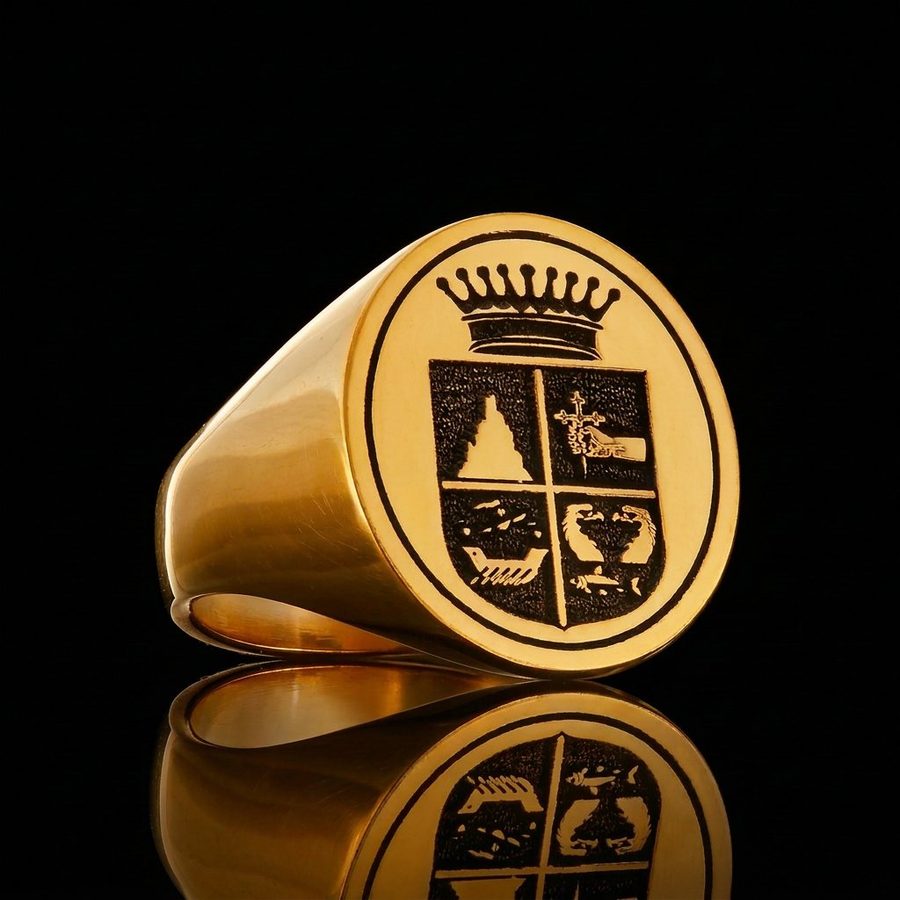
How Scottish heraldry looks different
Set a Scottish crest beside an English coat of arms and you can often tell them apart before you know a single rule.
English arms tend to build up over time. As families intermarried, they combined, or quartered, the arms of the houses they married into, so a single English shield can record four or five family lines at once. Scottish crests favour a single bold image that can be recognised from a distance, because the crest badge had to be read instantly by clansmen rather than studied up close.
The motifs differ too. Scotland shares the lion with England, most famously in the royal Lion Rampant, but it leans more heavily on the thistle, the stag, the boar and the hand gripping a dagger or sword. Tartan, a woven pattern linked to a clan and its district, has no real equivalent in English heraldry at all.
The Lord Lyon: heraldry as law
Most people assume heraldry is a tradition everyone quietly agrees to follow. In Scotland it is law. The Lord Lyon King of Arms heads the Court of the Lord Lyon in Edinburgh, a working court of law that has governed Scottish heraldry for centuries. Under an Act of 1672, using arms that haven’t been granted or matriculated to you is an offence the court can act on.
England’s College of Arms grants and records arms and can settle disputes, but misuse there doesn’t carry the same legal weight.
The difference matters in practice. If you inherit the right to a family’s arms in Scotland, the Lord Lyon can matriculate them to you, recording them in your name, usually with a mark showing your place in the family. Without that right, you can’t use the chief’s full arms. But you can always wear your clan’s crest badge, because that is exactly what it was designed for.
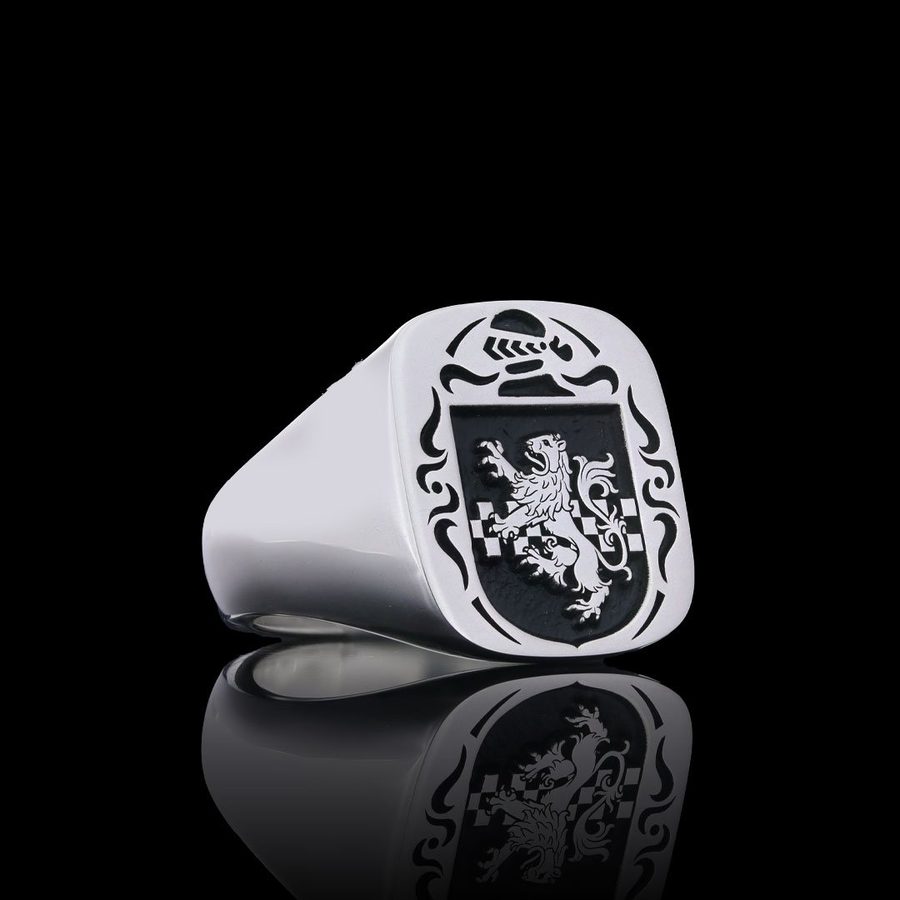
Wearing your clan’s crest
A clan crest badge connects you to the same act of belonging your family has made for generations, a quiet way of saying you still stand with your name. On a signet ring it can be engraved with the strap, buckle and motto, cut as a seal to press into wax, or set on a ring face sized to suit the hand that wears it.
At Clanmalier, every ring is made to order. Tell us your clan or your surname, and we’ll check which crest badge belongs to it, prepare a design for your approval and handcraft the ring.